.avif)









Malnutrition in childhood can lead to preventable diseases in adulthood and is often linked to the inadequate working conditions women face, according to UNICEF. Without awareness and support, women who rely on manual labor are unable to provide their children with proper nutrition from their first months. Specifically, women who work in the agriculture sector are more likely to be subject to food insecurity given the current climate volatility resulting in lower wages or lack of access to healthy nutrition. In fact, a 2024 World Bank publication on gender equality and climate change in Egypt specifically notes that women working in agriculture are given lower-paying opportunities.
Nutrition and food security are not only a local issue but also one of global concern. The Alive and Thrive (A&T) initiative, implemented by FHI 360 across multiple countries, exemplifies how private sector partnerships can play a critical role in advancing and alleviating nutrition issues. As part of this effort, Olam Food Ingredients (OFI,) a global food ingredients supplier, partnered with FHI 360 to implement the A&T program across 11 of its factories in Vietnam. The program aimed to improve nutrition and breastfeeding practices among OFI's female employees. This was done in alignment with OFI's sustainability framework and accompanying strategies, specifically with respect to improving rural and workers’ nutrition and health.
Building on the success in Vietnam, OFI sought to replicate the program at its factory in Beni Suef, Egypt, specifically targeting female workers responsible for onion peeling and other operations. In collaboration with FHI 360 and CID Consulting, the program was adapted to the local Egyptian context.
However, several constraints challenged the smooth implementation of the initiative.
· High rates of illiteracy among participants required innovative training approaches, such as the use of visual materials instead of text-heavy content.
· The timing of the onion harvest season also posed a challenge, as it was critical not to disrupt production or require women to miss work for workshops.
· Cultural sensitivities around breastfeeding made both survey design and training delivery more complex.

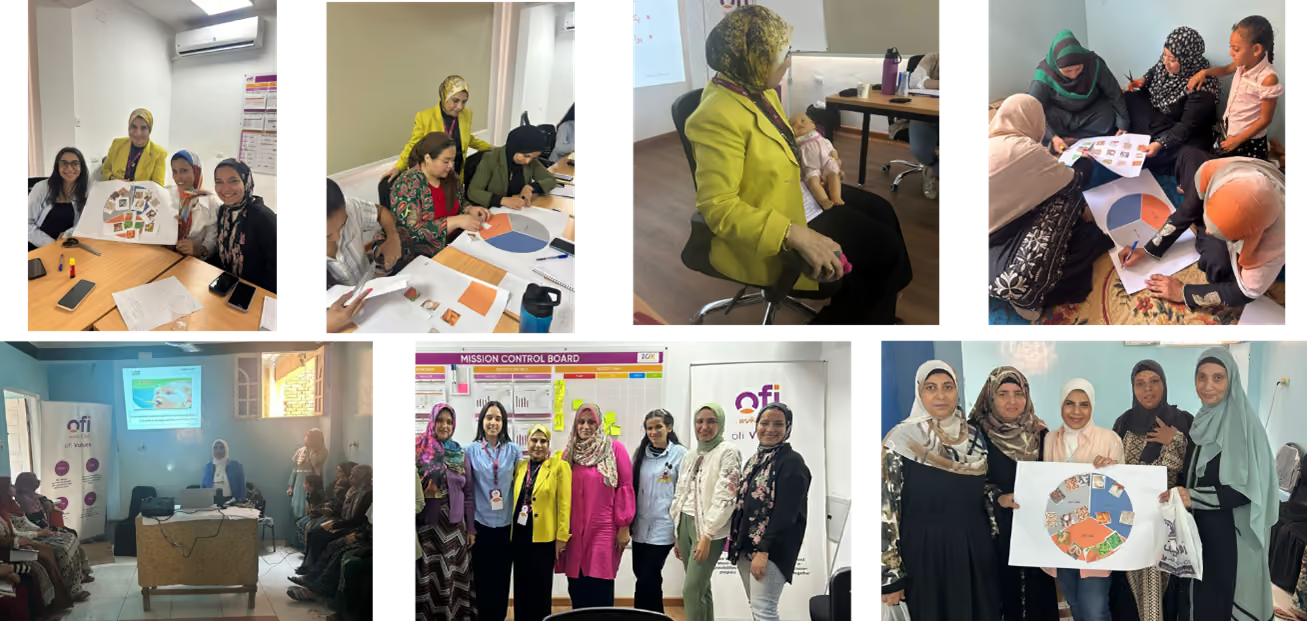


The CID team sought to address the need for Egyptian mothers to provide healthy and nutritious food to their families despite not having access to the resources that would enable them to adopt this lifestyle. With the global programs that address these challenges in need of localization to benefit Egyptian mothers and their children, we leveraged our capacity building experience with diverse Egyptian audiences to adopt the materials to launch a pilot project that we believe could be scaled up on a national level.
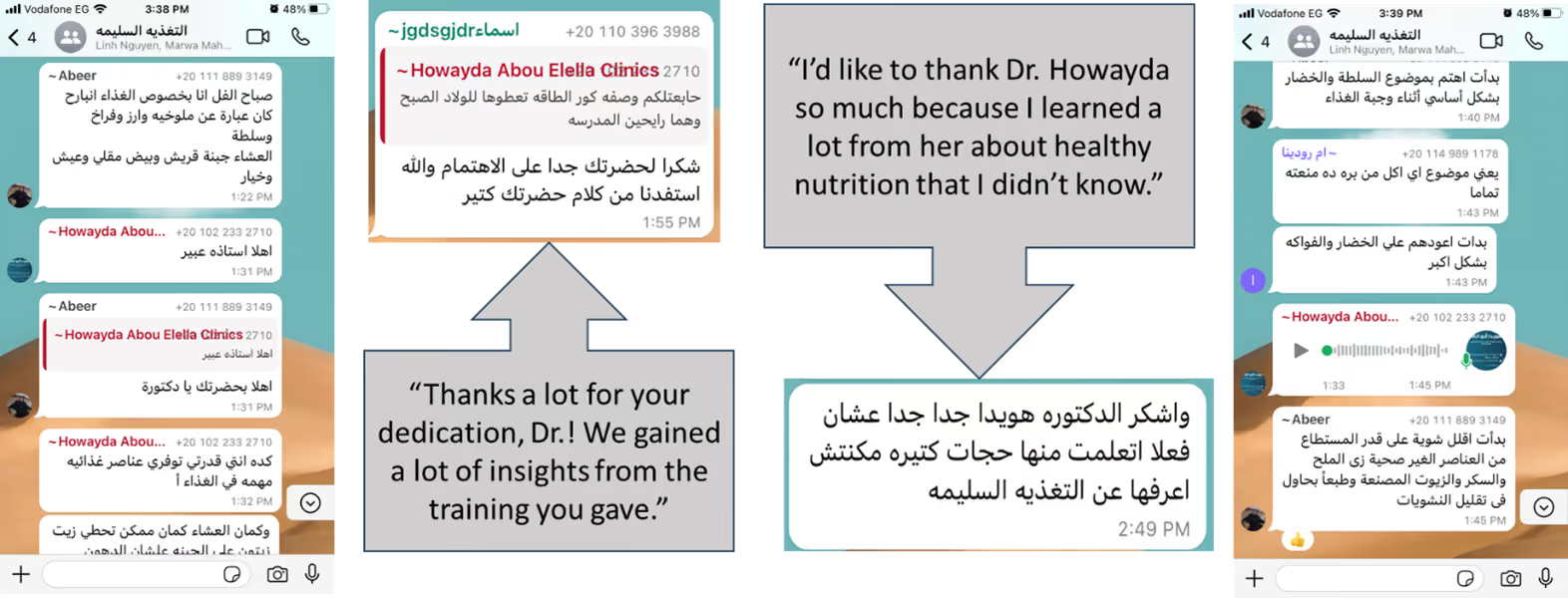
In order to gauge the knowledge of our target audience, OFI employees and female onion peelers in Beni Suef, CID started with a baseline survey on nutrition, healthy lifestyles, and breastfeeding. These results were utilized to inform the development and adaptation of the training content. Our next step was to deliver the training program through two-day training sessions for onion peelers, focusing on balanced nutrition, breastfeeding practices, and behavior change strategies. To contribute to the sustainability of this intervention inside of OFI, we conducted a one-day Training of Trainers (ToT) session for factory employees, enabling them to cascade knowledge to colleagues and their larger communities. This was paired with a tailored follow-up mechanism through engaging, user-friendly communication materials on nutrition and health tailored for digital dissemination and in-factory display. These materials focused on topics such as balanced nutrition and meal planning, importance of hydration and healthy snacking, breastfeeding tips and benefits, complementary feeding practices, hygiene and food safety, and quick, nutritious recipes for working families. Finally, we selected an accessible means of communication for the onion peelers, WhatsApp, to hold follow-up sessions reinforcing key messages, answering questions, and tracking progress.

Following the training sessions, the women were able to apply the concepts they learned in their day-to-day lives, as shown through their interaction in the WhatsApp group. They cooked nutritious balanced meals for their families and expressed how much they benefited from this knowledge. In fact, 80% of the participants showed 50% improvement in their knowledge according to the pre- and post-assessments.
It was a learning experience for the CID team too; the intervention allowed us to better understand the needs of female blue-collar workers. This supported us in refining our successful approaches in nutrition and lactation awareness raising for larger-scale interventions in similar contexts.